
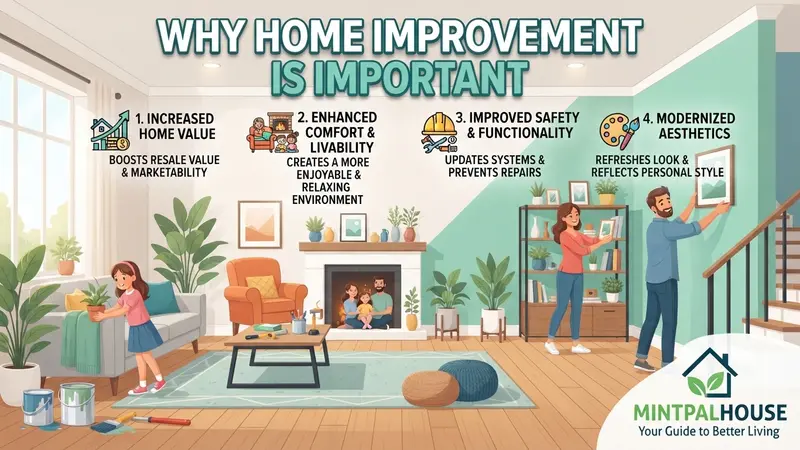
Home improvement is more than changing a house’s appearance. It is about creating a space that is comfortable, functional, safe, and suitable for everyday living. Understanding why home improvement is important MintPalHouse can help homeowners make thoughtful decisions about repairs, upgrades, organization, and design. Even small improvements, such as better lighting, fresh paint, improved storage, or updated fixtures, can make a noticeable difference.
A well-maintained home can also become easier and more enjoyable to use. Improvements may address problems before they become expensive repairs while making rooms more practical for different needs. Energy-efficient upgrades can potentially reduce unnecessary energy use, while improvements to kitchens, bathrooms, flooring, and outdoor areas can enhance daily convenience.
Home improvement can also reflect personal style and changing lifestyles. Whether the goal is to refresh one room or improve the entire property, careful planning helps homeowners focus on projects that deliver meaningful benefits. This guide explores the importance of home improvement and practical ways to approach it.
Table of Contents
- What Is Home Improvement?
- Why Home Improvement Is Important
- Improving Comfort and Functionality
- Increasing Home Safety
- Making Better Use of Space
- Improving Energy Efficiency
- Maintaining and Protecting the Property
- Enhancing the Appearance of Your Home
- Home Improvement and Property Value
- Budget-Friendly Improvement Ideas
- Common Home Improvement Mistakes
- A Simple Home Improvement Plan
- Final Thoughts
What Is Home Improvement?
Home improvement includes projects that repair, maintain, upgrade, or enhance a residential property. These projects can range from simple tasks such as painting walls and replacing cabinet hardware to larger renovations involving kitchens, bathrooms, flooring, roofing, or outdoor spaces.
Not every project needs to be expensive. Regular maintenance and small improvements can gradually make a home more comfortable and functional.
Why Home Improvement Is Important
Home improvement is important because a house should support the needs of the people who live in it. Over time, homes experience normal wear and tear, and household needs can change.
Some key benefits include:
| Benefit | How It Helps |
|---|---|
| Comfort | Creates a more pleasant living environment |
| Safety | Helps address potential hazards and maintenance problems |
| Functionality | Makes rooms easier to use |
| Appearance | Gives the home a cleaner and more attractive look |
| Efficiency | Can reduce unnecessary energy and water use |
| Maintenance | Helps prevent small problems from becoming larger ones |
| Value | May improve the property’s appeal to future buyers |
Improving Comfort and Functionality
One of the main purposes of home improvement is making everyday life easier. A poorly organized kitchen, uncomfortable bedroom, or inefficient bathroom can make routine activities unnecessarily difficult.
Simple changes can have a significant impact. Better storage can reduce clutter, improved lighting can make rooms more functional, and rearranging furniture can improve movement through a space.
Before starting a project, consider how the room is currently used and what problems need to be solved.
Increasing Home Safety
Maintenance-related improvements can help keep a home safer. Don’t ignore loose flooring, damaged stairs, poor lighting, leaking pipes, or outdated electrical components.
Homeowners can prioritize projects that address visible hazards first. Practical safety-related tasks include installing appropriate lighting, repairing damaged surfaces, checking smoke and carbon monoxide alarms, and maintaining doors and windows.
For electrical, structural, gas, or other specialized work, using a qualified professional is often the appropriate choice.
Making Better Use of Space
A home does not necessarily need more square footage to feel more spacious. Better organization and thoughtful design can help existing rooms work harder.
Consider:
- Adding shelves or built-in storage
- Using furniture with multiple purposes
- Removing unnecessary clutter
- Improving room layouts
- Creating dedicated work or study areas
- Using vertical storage where practical
These improvements can make smaller spaces feel more organized without requiring major construction.
Improving Energy Efficiency
Home improvements can also focus on energy efficiency. Depending on the property, useful upgrades may include improving insulation, sealing drafts, maintaining heating and cooling systems, and choosing efficient lighting and appliances.
Before spending money on an efficiency upgrade, homeowners should consider the property’s current condition and the expected long-term benefit. Some improvements may require a larger initial investment but can provide ongoing savings.
Maintaining and Protecting the Property
Regular maintenance is an important part of responsible home ownership. Ignoring small issues can let them develop into more complicated and expensive problems.
A practical maintenance routine may include checking:
- Roofs and gutters
- Plumbing fixtures
- Doors and windows
- Walls and ceilings
- Flooring
- Exterior surfaces
- Heating and cooling equipment
- Electrical components
Keeping up with these areas can help preserve the property’s condition.
Enhancing the Appearance of Your Home
Home improvement does not always have to solve a serious problem. Sometimes the goal is simply to create a space that looks and feels better.
Fresh paint, updated curtains, attractive lighting, new hardware, improved landscaping, and coordinated furniture can refresh a room without requiring a complete renovation.
The key is to choose improvements that complement the home’s existing style rather than following every short-lived design trend.
Home Improvement and Property Value
Certain improvements may make a property more appealing to potential buyers. Kitchens, bathrooms, exterior appearance, flooring, maintenance, and energy-related features can all influence how a home is perceived.
However, homeowners should not assume that every renovation will return its full cost. The potential financial benefit depends on factors such as location, project quality, local buyer preferences, and market conditions.
For this reason, improvements should ideally provide value to the current homeowner as well as potential future buyers.
Budget-Friendly Improvement Ideas
You can approach home improvement at different budget levels. Some affordable ideas include:
- Repainting walls: A new color can refresh a room.
- Updating light fixtures: Better lighting can change the atmosphere and functionality.
- Replacing cabinet handles: Small hardware changes can modernize kitchens and bathrooms.
- Improving storage: Shelves, baskets, and organizers can reduce clutter.
- Refreshing outdoor areas: Cleaning, planting, and simple seating can improve exterior spaces.
- Repairing minor damage: Fixing small problems early may prevent further deterioration.
Common Home Improvement Mistakes
Planning is essential because poorly planned projects can waste money and time. Common mistakes include starting without a clear budget, choosing materials based only on appearance, ignoring maintenance requirements, and attempting specialized work without appropriate expertise.
Another mistake is trying to improve every room at once. Focusing on one priority at a time can make projects easier to manage.
A Simple Home Improvement Plan
A practical approach can follow these steps:
Step 1: Inspect the home
Identify repairs, maintenance needs, and areas that could work better.
Step 2: Set priorities
Deal with safety and urgent maintenance issues before cosmetic projects.
Step 3: Create a budget
Estimate material, labor, and unexpected costs.
Step 4: Choose projects
Select improvements that match your needs and available resources.
Step 5: Plan the details
Decide on materials, measurements, colors, and timelines before starting.
Step 6: Review the results
After completing each project, check whether it actually improved the space. Learn more about home improvement.
Final Thoughts
Understanding why home improvement is important MintPalHouse is ultimately about looking at a home as a long-term living environment rather than simply a building. Thoughtful improvements can make everyday spaces more comfortable, functional, organized, and attractive, while regular maintenance helps protect the property.
The best approach does not necessarily involve expensive renovations. Small, well-planned changes can solve practical problems and create noticeable improvements. By identifying priorities, setting a realistic budget, and choosing projects based on actual household needs, homeowners can improve their spaces gradually and confidently. Whether the goal is better comfort, improved efficiency, increased safety, or a refreshed appearance, home improvement can meaningfully change how a home works and feels.