
Your home should be a place where you feel comfortable, relaxed, and inspired. However, creating a beautiful, functional living space doesn’t always require expensive furniture, major renovations, or professional interior designers. With the right ideas, a little creativity, and careful planning, you can transform your home into a more attractive and organized space without spending a fortune.
Upgrading tips DecorAdHouse focuses on practical and affordable ways to improve your home, from refreshing your walls and rearranging furniture to making better use of storage and adding stylish decorations. Small changes can make a noticeable difference in how a room looks and feels, especially when every improvement serves a clear purpose.
Whether you live in a small apartment, a family home, or a spacious property, the best home upgrades suit your lifestyle, fit your budget, and make everyday living easier. In this guide, you will discover simple home improvement ideas that combine comfort, functionality, and style while helping you avoid unnecessary expenses.
1. Start with a Clear Home Improvement Plan
Before purchasing decorations or starting a renovation project, take some time to evaluate your home. Walk through each room and identify the areas that need attention. You might notice faded paint, poor lighting, crowded shelves, outdated accessories, or furniture that makes a room feel smaller than it actually is.
Instead of trying to improve everything at once, create a priority list. Start with changes that offer the greatest benefit for the lowest cost.
For example, repairing a loose cabinet handle, replacing damaged curtains, or improving the lighting in a dark corner can make a room more comfortable without requiring a significant investment.
Set a realistic budget for each project and compare prices before buying materials. It is also helpful to distinguish between essential repairs and optional decorative upgrades. Prioritize fixing a leaking tap or damaged electrical outlet over buying decorative accessories.
A simple plan keeps your spending under control and helps you achieve better results with less effort.
2. Refresh Your Walls with Affordable Ideas
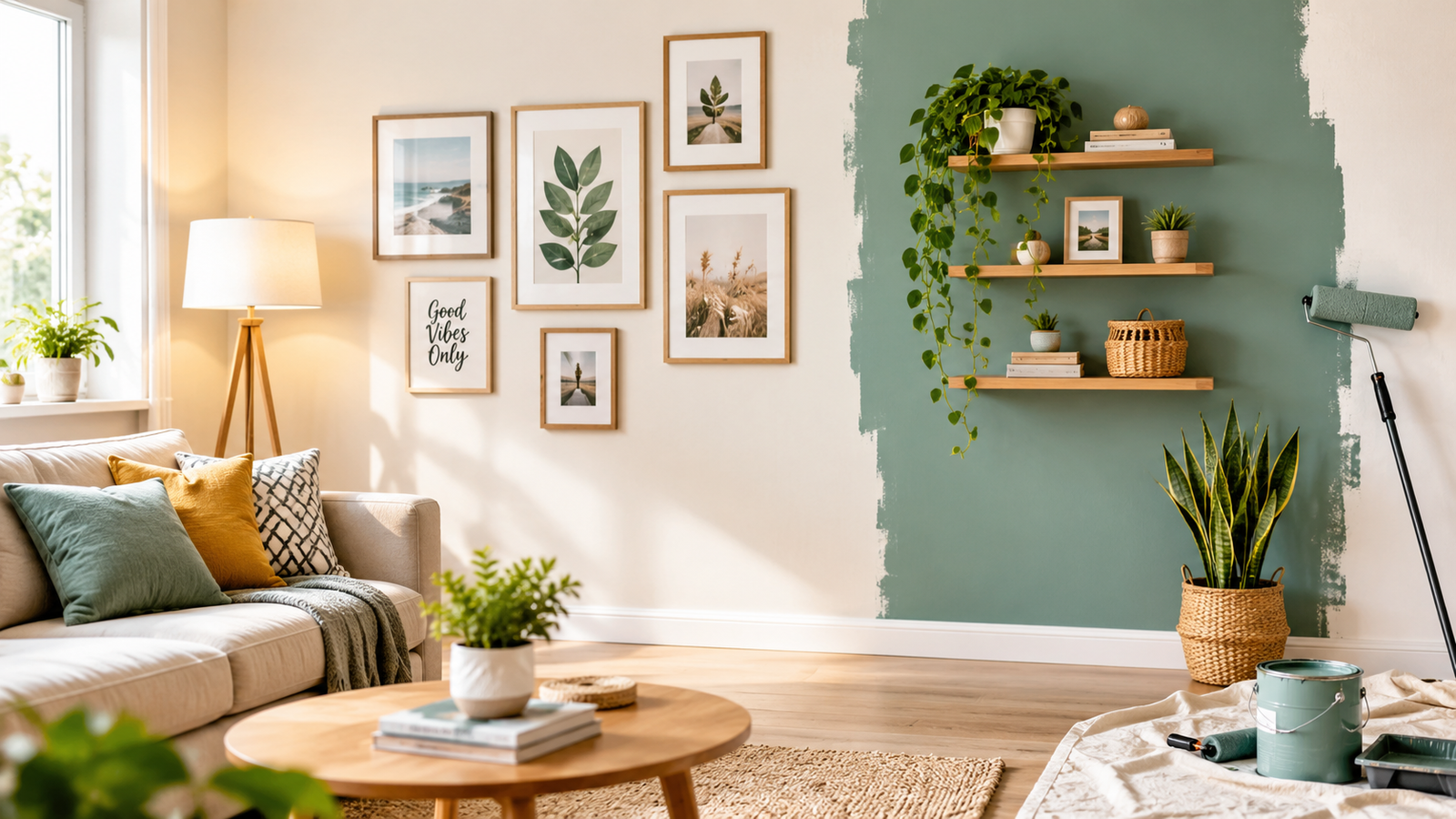
Walls strongly influence a room’s appearance. Fortunately, you do not need expensive wall coverings or elaborate designs to make them look attractive.
One of the easiest ways to refresh a room is by applying a new coat of paint. Light shades such as warm white, cream, soft beige, and pale gray can make many spaces feel brighter and more open. For more character, consider painting a single accent wall in a deeper color that complements your existing furniture.
If repainting is not practical, try other low-cost decorating options:
-
Create a simple gallery wall: Arrange family photographs, framed prints, or artwork in a balanced layout.
-
Use removable wall decals: These can add personality without the commitment of permanent changes.
-
Display decorative shelves: Floating shelves provide space for books, small plants, and personal collections.
-
Update old frames: Painting existing frames can give familiar decorations a fresh appearance.
Before painting or installing anything, prepare the wall properly and choose materials suitable for its surface. In damp areas, find the source of moisture before painting or covering the affected section.
The goal is to create a clean, coordinated appearance rather than filling every empty wall with decorations.
3. Rearrange Furniture to Improve Space
You don’t always need to buy new furniture to improve your living room or bedroom. Sometimes, rearranging the furniture you already own can create a more practical and inviting space.
Begin by identifying the main purpose of the room. A living room might need a comfortable conversation area, while a bedroom should prioritize relaxation and easy movement around the bed.
Keep frequently used pathways clear, and avoid placing large furniture where it blocks natural light. In smaller rooms, careful furniture placement can make the space feel less crowded.
Consider these practical adjustments:
-
Arrange sofas and chairs to encourage conversation.
-
Position desks near windows when natural light is suitable for working.
-
Remove unnecessary furniture that takes up valuable floor space.
-
Use multifunctional furniture, such as storage ottomans or beds with drawers.
-
Keep frequently used items within easy reach.
Before moving heavy furniture, measure the room and check the intended placement. This simple step saves effort and helps you choose the best arrangement.
A well-organized room often feels larger, even when its actual dimensions remain unchanged.
4. Improve Lighting for a Warmer Atmosphere
Start by making the most of natural daylight. Open curtains during the day, clean windows regularly, and avoid placing bulky objects directly in front of windows.
For artificial lighting, combine different light sources based on each room’s purpose. Ceiling lights provide general illumination, table lamps support reading and other focused activities, and smaller accent lights can highlight decorative features.
Affordable lighting improvements include:
-
Replacing outdated lampshades with simple, modern designs.
-
Choosing LED bulbs that provide suitable brightness while using less electricity than many traditional bulbs.
-
Adding a desk lamp to improve a home workspace.
-
Using warm-white lighting in relaxing areas and clearer task lighting where detailed work is performed.
-
Cleaning existing light fixtures to improve their appearance.
Always check bulb compatibility and fixture ratings before replacing lighting components. Electrical work beyond basic, safe bulb replacement should be handled by a qualified professional.
With thoughtful lighting, even a simple room can feel more welcoming without expensive remodeling.
5. Upgrade Your Kitchen Without a Full Renovation
The kitchen is one of a home’s busiest areas, so small improvements can significantly improve daily convenience. Fortunately, a complete renovation isn’t the only way to create a cleaner, more attractive kitchen.
Start by clearing the countertops and keeping only the items you use regularly. When practical, store occasional appliances in cabinets, and group similar supplies together to make cooking easier.
Next, inspect your existing cabinets and drawers. Replacing worn handles with affordable, modern hardware can dramatically change their appearance. If the cabinet surfaces are still in good condition, a thorough cleaning may be enough to make them look refreshed.
Other budget-friendly kitchen upgrades include:
-
Adding drawer dividers to organize utensils.
-
Using clear containers for frequently used dry ingredients.
-
Installing shelves to use vertical space.
-
Replacing worn dish towels and table accessories.
-
Improving under-cabinet lighting with properly rated fixtures.
-
Repairing dripping taps and replacing damaged seals.
Before buying organizers, measure your cabinets to avoid wasting money on products that don’t fit.
Avoid covering damaged countertops or cabinets without addressing the underlying problem. Moisture, loose fittings, and deteriorating surfaces should be repaired before decorative improvements are added.
6. Make Your Bathroom Cleaner and More Functional
A bathroom can look significantly better with a few inexpensive changes. Instead of replacing every fixture, concentrate on cleanliness, storage, and the details that people notice most.
Begin by removing empty containers, expired toiletries, and unnecessary accessories. Use small baskets or drawer organizers to separate daily essentials from less-used products.
Replacing an old shower curtain, updating towel colors, or adding a matching soap dispenser can create a more coordinated appearance. A clean mirror and properly maintained fixtures also help the room feel brighter.
Pay attention to ventilation and moisture control. Use an exhaust fan where available, or ventilate the room appropriately to reduce excess humidity. Repair leaking taps and investigate recurring dampness rather than hiding stains behind decorations.
For added convenience, consider a small shelf for toiletries or towel hooks, provided they are securely installed and suitable for the wall surface.
Keep walkways clear and choose nonslip solutions where needed, especially around wet floors.
The most successful bathroom upgrades combine an attractive appearance with easy cleaning, safe movement, and practical storage.
7. Add Plants and Natural Elements
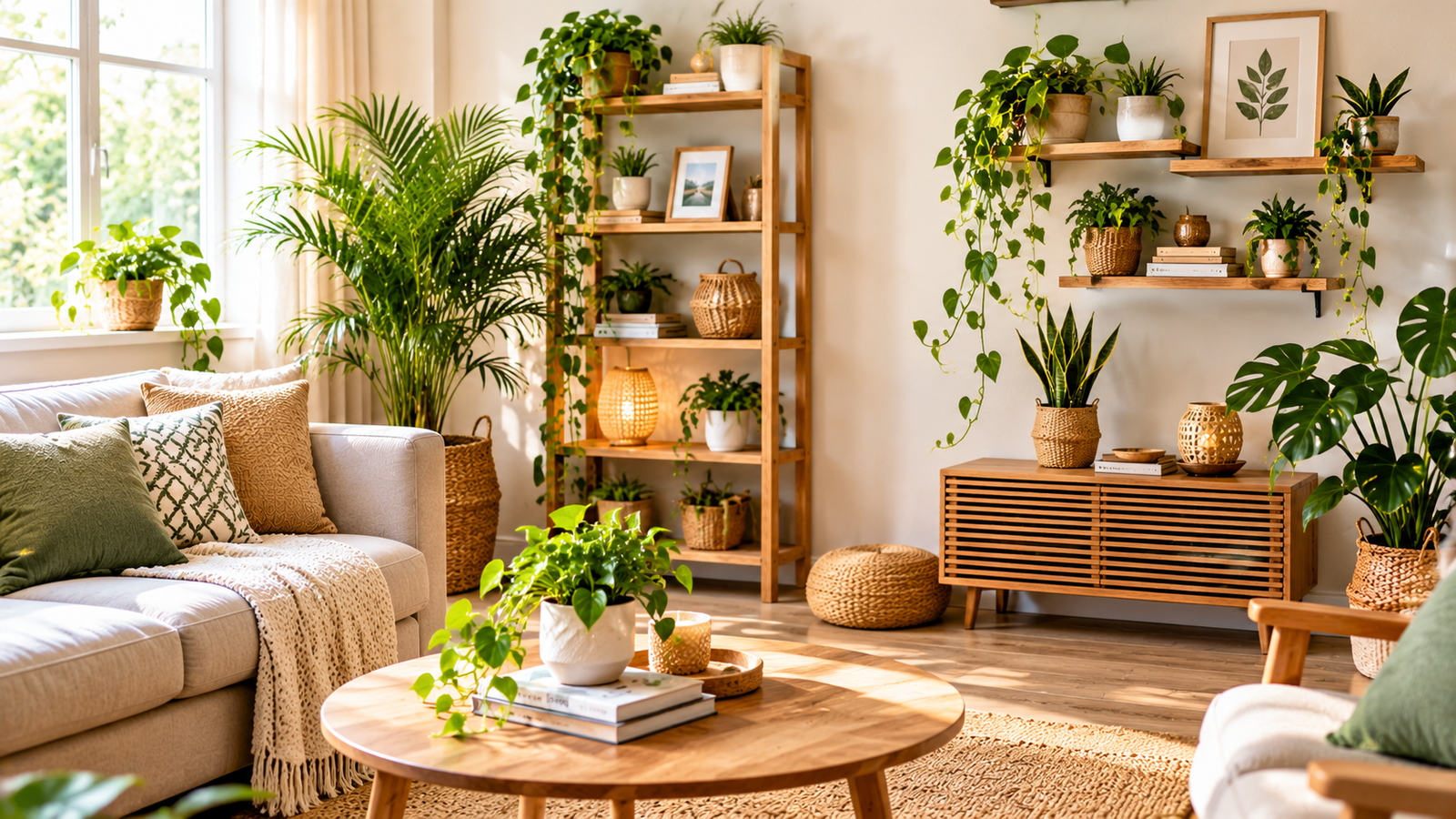
Natural elements can make a home feel more relaxed and visually interesting. Indoor plants are popular because they add color, texture, and a connection to nature without major decorative changes.
If you are new to plant care, start with varieties that match the available light and your maintenance routine. Snake plants and pothos are popular for their adaptability, though their needs still depend on growing conditions.
Display plants on windowsills, shelves, side tables, or suitable floor stands. Choose containers that complement the room rather than buying several unrelated decorative pots.
If you prefer not to care for live plants, dried arrangements or realistic artificial greenery can provide a similar decorative effect.
Natural materials are another affordable way to create warmth. Wooden trays, woven baskets, cotton cushion covers, and linen-style curtains can add appealing texture to an otherwise plain room.
Avoid overcrowding shelves with too many accessories. A few carefully selected natural elements often create a cleaner, more balanced appearance than a large collection of decorations.
8. Improve Storage and Reduce Everyday Clutter
An organized home is easier to maintain and generally feels more comfortable. However, effective organization doesn’t require expensive storage systems.
Begin by sorting your belongings into three groups: items you use regularly, items you want to keep but rarely use, and items you no longer need. Donate usable belongings when appropriate and dispose of damaged items responsibly.
Next, assign a practical place for everything you decide to keep.
For example, use labeled boxes for seasonal decorations, baskets for everyday accessories, and drawer dividers for smaller household items. Vertical shelving can also help you use wall space instead of letting belongings pile up on the floor.
Try these additional ideas:
-
Store seasonal clothing in clearly labeled containers.
-
Keep frequently used kitchen supplies near where you use them.
-
Use the space beneath beds for storage boxes that fit.
-
Create a designated place for keys, mail, and other everyday essentials.
-
Spend a few minutes each evening putting items back in their proper places.
Before purchasing organizers, reuse suitable containers you already own. Shoeboxes, sturdy baskets, and repurposed jars can work well when they are clean and fit their intended purpose.
Remember that organization should simplify your routine, not create more work. Choose a system that everyone in the household can follow.
9. Refresh Your Bedroom for Better Comfort
Your bedroom should support rest and relaxation. Small, affordable adjustments can make it feel more peaceful without requiring new furniture or a complete redesign.
Start with the bed, which is usually the room’s main visual feature. Clean bedding, coordinated pillow covers, and a neatly arranged blanket can instantly improve the overall appearance.
Choose colors that work well together, rather than introducing too many competing patterns. Neutral bedding paired with one or two accent colors creates a balanced look while letting you change the style later with inexpensive accessories.
Next, reduce clutter on bedside tables and dressers. Keep essentials nearby and move unnecessary items into drawers or storage baskets.
Blackout curtains may help people who need a darker sleeping environment, while lighter curtains can be useful in rooms where daylight is preferred. Choose options based on your privacy needs, climate, and sleep schedule.
You can also improve comfort by checking the mattress condition, maintaining good room ventilation, and keeping the floor clear of obstacles.
These improvements focus on how the bedroom feels as much as how it looks, making the space more enjoyable to use every day.
10. Improve Outdoor Areas and Entryways

Your home’s entrance creates the first impression for visitors and can make everyday arrivals more pleasant. Even a small porch, balcony, or doorway can benefit from simple improvements.
Start by sweeping the entrance, cleaning the door, and removing unnecessary items. A fresh doormat, a healthy potted plant, or a neatly arranged pair of outdoor chairs can make the space feel more welcoming.
If the exterior needs attention, inspect the door hardware, visible trim, and outdoor lighting. Cleaning and repairing existing features is often more affordable than replacing them.
For balconies and small patios, choose furniture that fits the available area. Foldable chairs, compact tables, and vertical plant stands offer useful features without taking up too much space.
Before making outdoor changes, consider the weather and maintenance needs. Select outdoor materials that can withstand local heat, rain, humidity, and sunlight.
Keep entrances and steps clear, and ensure outdoor lights provide enough visibility after dark. Any damaged exterior wiring or unstable railings should be repaired properly rather than concealed with decorations.
11. Choose Affordable Improvements That Last
A low price does not always mean good value. Some inexpensive products wear out quickly, require frequent replacement, or create additional maintenance costs.
Before buying anything for your home, consider its quality, durability, usefulness, and expected maintenance. Spending a little more on a frequently used item can sometimes save money over time.
You can make better purchasing decisions by following a few simple guidelines:
Compare prices: Check several sellers before purchasing furniture, lighting, paint, or accessories.
Reuse existing items: Repair, repaint, or repurpose suitable belongings instead of replacing everything.
Prioritize practical upgrades: Fix problems that affect safety, comfort, or daily use before spending money on purely decorative features.
Avoid impulse purchases: Measure spaces and check compatibility before ordering products.
Work in stages: Complete one small project before moving on so you can track expenses and evaluate results.
If you are considering a larger renovation, request detailed estimates and set aside a contingency fund for unexpected costs. Structural repairs, plumbing changes, and electrical upgrades may require professional assessment.
A thoughtful approach helps you create a home that looks attractive today and remains practical in the future.
12. Create a Simple Home Improvement Routine
Home improvement does not have to be a one-time project. Regular maintenance and small updates can prevent minor problems from becoming expensive repairs.
Develop a routine that fits your schedule. Clean frequently used areas regularly, inspect plumbing for leaks, check doors and windows for obvious damage, and keep storage areas manageable.
You can also plan one affordable improvement each month. For example, January might focus on decluttering, February on lighting, and March on refreshing a bedroom or organizing the kitchen.
This approach spreads expenses over time and allows you to learn what works best for your home.
Keep a simple record of completed repairs, materials purchased, and upcoming maintenance tasks. This is particularly useful for homeowners managing several projects or trying to stay within a fixed budget.
Most importantly, don’t compare your home to professionally staged interiors or expensive renovation projects online. Your home should reflect your own needs, preferences, and available resources.
Progress matters more than perfection. Learn more about Home Improvement Tips.
Final Thoughts
Improving your home does not require a large budget or dramatic renovations. With the right approach, small changes, like refreshing walls, rearranging furniture, improving lighting, organizing storage, and adding natural decor, can make everyday spaces more attractive and functional.
These upgrading tips DecorAdHouse demonstrate that successful home improvement begins with understanding your needs, setting realistic priorities, and making thoughtful use of the resources you already have.
Start with one room or one manageable task, compare your options, and focus on changes that offer genuine value. As you complete each project, you will gradually create a more organized, comfortable, and welcoming living environment.
The best home isn’t necessarily the most expensive. It is the space that supports your daily routine, reflects your personality, and makes you feel at ease. By combining creativity with practical planning, you can build a home you enjoy without putting unnecessary pressure on your budget.