
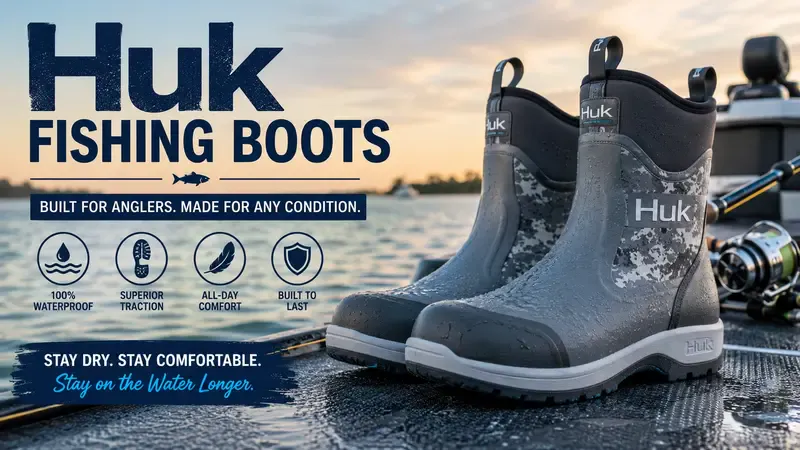
Fishing is not only about choosing the right rod, reel, and bait. The right footwear is equally important, especially when you spend long hours around water, mud, wet boat decks, rocky shorelines, or changing weather conditions. A good pair of fishing boots can help keep your feet dry, improve comfort, and provide better stability while you move around your fishing environment.
Huk fishing boots are designed with anglers and outdoor conditions in mind. However, choosing the right pair requires more than simply looking for a waterproof boot. Consider traction, fit, height, insulation, materials, durability, and the type of fishing you do.
This guide explains what to look for in fishing boots and how to choose a pair that matches your fishing needs.
What Are Huk Fishing Boots?
Huk fishing boots are purpose-built footwear for anglers who regularly encounter wet, challenging outdoor conditions. Depending on the specific style, fishing boots may provide water protection, traction, comfort, and protection from mud and other outdoor elements.
Fishing environments can vary significantly. An angler fishing from a boat may have different footwear requirements from someone walking along a muddy riverbank. Similarly, boots suitable for warm-weather fishing may not be ideal for cold-weather trips.
For this reason, the best fishing boot matches your particular environment and fishing habits.
Why Are Fishing Boots Important?
Ordinary sneakers or casual shoes are not designed for prolonged exposure to water, mud, and slippery surfaces. Fishing boots are designed to address these challenges.
A suitable pair can help:
- Keep feet protected from water and mud
- Provide traction on wet surfaces
- Improve comfort during long fishing trips
- Protect feet from rough terrain
- Provide additional warmth in cold conditions
- Make muddy footwear easier to clean
- Support safer movement around boats and shorelines
While boots cannot prevent every slip or accident, suitable footwear can be an important part of responsible preparation for a fishing trip.
Key Features to Look for in Huk Fishing Boots
Before purchasing fishing boots, consider the features that matter most for your conditions.
1. Waterproof Protection
Water protection is one of the first things anglers should consider. Fishing can involve rain, splashing water, wet grass, puddles, mud, and accidental contact with the water.
A waterproof fishing boot can help prevent moisture from reaching your feet and socks. However, different boots provide different levels of water protection.
If you regularly spend time in very wet environments, examine the manufacturer’s specifications rather than assuming that every fishing boot offers the same level of waterproofing.
2. Traction and Grip
Traction is particularly important when fishing around wet surfaces. Boat decks, docks, rocks, ramps, and muddy banks can become slippery.
The outsole and tread pattern of a fishing boot can influence how much grip it provides. Your choice should depend on where you normally fish.
For example, an angler who spends most of the day on a boat may prioritize wet-surface traction, while someone who walks along muddy or uneven banks may need an outsole suited to softer terrain.
Even with good footwear, always move carefully on slippery surfaces.
3. Comfort
Fishing trips can last several hours, and uncomfortable footwear can quickly turn an enjoyable day into an unpleasant one.
When choosing Huk fishing boots, consider:
- Overall fit
- Toe room
- Heel security
- Weight
- Flexibility
- Interior comfort
- Support
The boot should feel secure without squeezing your feet. If you plan to wear thick socks in colder weather, allow enough room without making the boot excessively loose.
4. Durability
Fishing boots are exposed to conditions that can cause wear over time. Mud, rocks, water, salt, sunlight, and repeated walking can all affect footwear.
Look for durable construction and materials suitable for outdoor use. However, balance durability with comfort and weight. A very heavy boot may be unnecessarily tiring if you regularly walk long distances.
5. Insulation
If you fish during colder months, insulation can make a significant difference.
Insulated boots are designed to help retain warmth, which can be useful when temperatures are low. On the other hand, heavily insulated footwear can become too warm in hot weather.
If you fish throughout different seasons, consider the temperatures you normally encounter before selecting an insulated or non-insulated option.
Different Types of Fishing Boots
Fishing boots come in various designs, and each type can be useful in different situations.
Waterproof Fishing Boots
Waterproof boots suit anglers who frequently encounter rain, puddles, wet ground, or splashing water. They are especially useful when staying dry is a priority.
Rubber Fishing Boots
Rubber boots are commonly associated with muddy and wet environments. They are generally easy to clean and can provide a strong barrier against water.
They can be practical for muddy banks, marshy areas, and other locations where footwear is likely to become heavily soiled.
Insulated Fishing Boots
Insulated boots are designed for colder conditions. They can help keep feet warmer during winter fishing trips.
When choosing insulated boots, consider both temperature and activity level. If you walk frequently, excessive insulation or weight may become uncomfortable.
Lightweight Fishing Boots
Lightweight boots can be useful for anglers who hike or walk significant distances before reaching their fishing location.
The goal is to balance low weight with the protection, traction, and durability your environment requires.
Fishing Boot Height: Why It Matters
Boot height can affect both protection and comfort.
Lower boots may suit light rain and everyday wet conditions, while taller boots can provide extra protection when walking through deeper mud, puddles, or wet vegetation.
Before choosing a boot height, consider the environments you encounter most frequently. Taller boots aren’t automatically better if you rarely need extra water or mud protection.
Choosing the Right Material
The materials used in fishing boots can affect their weight, flexibility, durability, and water resistance.
Rubber and synthetic materials are commonly used in outdoor and fishing footwear. Some designs combine different materials to balance flexibility with protection.
Rather than choosing a boot solely for its material, consider the overall construction and whether it suits your fishing environment.
Huk Fishing Boots for Boat Fishing
Boat fishing requires footwear that can handle wet surfaces and frequent movement.
Water can come onto the deck from waves, spray, rain, or handling fish. A boot with appropriate traction and water protection can therefore be useful.
Comfort is also important because anglers may stand for long periods while casting, retrieving lines, or moving around the boat.
Keep in mind that footwear is only one part of boat safety. Keep walking areas clear, maintain awareness of slippery surfaces, and move carefully when the deck is wet.
Huk Fishing Boots for Bank Fishing
Bank fishing often requires more walking and may involve mud, grass, rocks, uneven ground, and wet vegetation.
For this type of fishing, look for boots that offer a good balance of traction, durability, comfort, and water protection.
If you walk long distances, a lighter boot may reduce fatigue. If the area is consistently muddy or wet, additional boot height and water protection may be more useful.
Fishing Boots for Cold Weather
Cold-weather fishing requires careful consideration of warmth and moisture protection.
Wet feet can become uncomfortable quickly in low temperatures. Insulated fishing boots can help retain warmth, while waterproof construction can help keep moisture away from your socks.
Remember to consider the socks you will wear. A boot that fits comfortably with thin socks may feel too tight when paired with thick winter socks.
Fishing Boots for Warm Weather
Warm-weather fishing presents a different challenge. Heavy insulation can make your feet hot and uncomfortable.
During warmer conditions, anglers may prefer lighter footwear with appropriate water protection and breathability, depending on the fishing environment.
The ideal choice should provide enough protection without adding unnecessary weight or warmth.
How to Choose the Right Huk Fishing Boots
Choosing the right pair becomes easier when you start with your actual fishing habits.
Ask yourself:
- Do I mainly fish from a boat or from the shore?
- How often do I encounter mud or standing water?
- Do I normally fish in warm, cold, or changing weather?
- How many hours do I wear my boots?
- Do I walk long distances to reach fishing locations?
- Do I need insulation?
- How important is lightweight construction?
- What type of surfaces do I normally walk on?
- Do I need taller boots for additional protection?
Answering these questions can help you focus on features that are genuinely useful instead of choosing based only on appearance.
Getting the Right Fishing Boot Size
A proper fit is essential. Boots that are too tight can cause discomfort, while boots that are too loose can move excessively and make walking less stable.
When selecting a size:
- Check the manufacturer’s sizing information.
- Consider the thickness of your fishing socks.
- Make sure your toes have sufficient room.
- Check that your heel does not move excessively.
- Avoid excessive tightness around the foot or ankle.
If you are purchasing online, carefully review the available size information before ordering.
How to Care for Huk Fishing Boots
Proper maintenance can help extend the useful life of your fishing boots.
After fishing, remove mud, sand, grass, and other debris. Rinse or clean the exterior according to the manufacturer’s care instructions.
Allow the boots to dry naturally in a well-ventilated area. Avoid excessive direct heat because high temperatures may damage certain materials.
If you regularly fish in saltwater, cleaning the boots after use is especially important. Salt and residue can accumulate on outdoor equipment over time.
Also inspect the outsole periodically. If the tread becomes significantly worn, traction may be reduced.
Common Mistakes When Buying Fishing Boots
A common mistake is choosing fishing boots based only on waterproofing. Although water protection is important, it is not the only consideration.
Other mistakes include:
- Choosing the wrong size
- Ignoring traction
- Buying unnecessarily heavy boots
- Choosing too much insulation for warm weather
- Ignoring boot height
- Failing to consider the fishing environment
- Selecting footwear without considering how long it will be worn
The best pair should match your actual fishing conditions rather than simply having the longest list of features.
How Long Can Fishing Boots Last?
There is no fixed lifespan for fishing boots because durability depends on use and maintenance.
Frequent exposure to saltwater, mud, rocks, sunlight, and rough surfaces can increase wear. Regular cleaning and proper storage can help maintain the boots.
Inspect your footwear for cracked materials, damaged seams, worn tread, or reduced water protection. If the boots no longer provide the protection or traction you need, replacing them may be appropriate.
Practical Fishing Tips for Better Preparation
Good footwear is only one part of successful fishing preparation. Before heading out, check the weather, understand the fishing location, and make sure your equipment suits the target species.
Carry essential gear such as your rod and reel, line, hooks, bait or lures, pliers, extra line, water, and weather-appropriate clothing.
Pay attention to the water, too. Fish may gather around structures such as vegetation, rocks, drop-offs, or other areas that provide food and shelter.
Most importantly, follow local fishing regulations and respect the environment. Dispose of fishing line and other waste properly and follow applicable catch, size, and seasonal rules.
Final Thoughts
Choosing the right Huk fishing boots is about finding the right balance between protection, traction, comfort, durability, and weather suitability. No single fishing boot is perfect for every angler or every environment.
Boat anglers may prioritize wet-surface traction and water protection, while bank anglers may need additional durability, grip, and protection from mud. Cold-weather fishermen may focus more on insulation, while anglers in warmer climates may prefer lightweight footwear.
Before you buy, consider where you fish, how long you normally spend outdoors, what weather you encounter, and how much walking you do. By matching the boot’s features to your needs, you can choose footwear that keeps your feet comfortable and protected throughout your fishing adventures. For more information, visit my website, thunderonthegulf.
Pingback: Family Fishing on the Gulf Coast, Tips, Safety, and Fun for All Ages - Thunder On The Gulf Blogs