
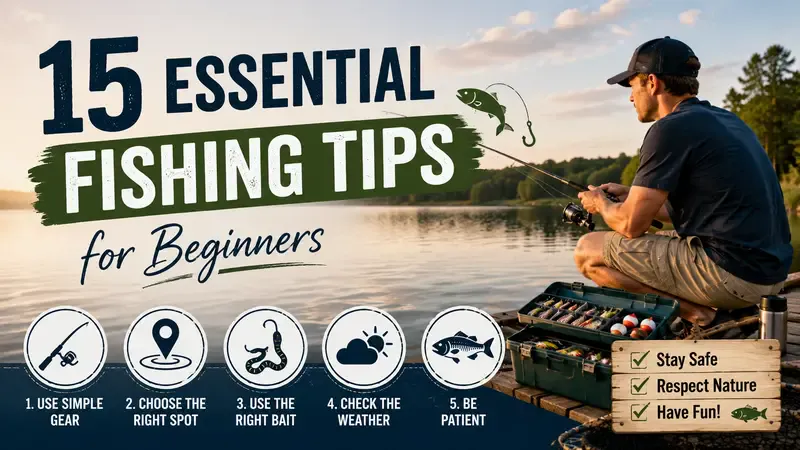
Fishing is an enjoyable outdoor activity that allows people to relax, explore nature, and learn valuable skills. However, beginners may feel unsure about choosing the right equipment, selecting bait, finding productive fishing spots, or handling a catch. Learning a few basic techniques can make the experience easier and more enjoyable from the very first trip.
These 15 essential fishing tips for beginners cover the fundamentals every new angler should know. From choosing simple fishing gear and learning basic casting to understanding weather, water conditions, bait selection, and fish behaviour, these tips provide a practical starting point. You will also learn why patience, sharp hooks, proper drag settings, and careful fish handling are important for successful fishing.
Whether you are planning to fish in a lake, river, pond, or coastal area, these beginner-friendly tips can help you build confidence and improve your skills. With regular practice, careful observation, and respect for nature, every fishing trip can become a valuable and rewarding learning experience.
1. Start With Simple Fishing Gear
Beginners often make the mistake of buying too much equipment. You only need a basic setup to get started.
A simple spinning rod-and-reel combination is usually easy to handle and works well for many common fishing situations. Choose equipment that feels comfortable in your hands rather than focusing only on price or advanced features.
Your basic gear can include:
- Fishing rod and spinning reel
- Fishing line
- Hooks
- Bobbers
- Sinkers
- Pliers
- Bait or lures
- Small tackle box
- Measuring tape
- Fishing licence, where required
Starting simple lets you learn the basics without feeling overwhelmed.
2. Choose the Right Fishing Location
Where you fish can make a major difference. Beginners should consider accessible locations such as ponds, lakes, slow-moving rivers, or managed fishing areas.
Look for places where fish are likely to gather. Structures such as fallen trees, rocks, vegetation, docks, and changes in water depth can provide shelter and food for fish.
Before fishing, research the location and learn which species are commonly found there. This information can help you select suitable bait, tackle, and techniques.
3. Learn How Your Rod and Reel Work
Before going fishing, spend some time practising with your rod and reel. Learn how to open and close the bail, adjust the drag, hold the rod correctly, and retrieve the line.
Understanding your equipment makes fishing much easier once you are on the water.
Practice casting in an open area before your first serious fishing trip. Even a few minutes of practice can improve your accuracy and confidence.
4. Use the Right Fishing Line
Fishing lines come in different types, strengths, and sizes. Monofilament is a popular choice for beginners because it is relatively affordable, easy to handle, and suitable for many basic fishing situations.
Match line strength to the fish you are targeting and the environment where you are fishing.
Using extremely heavy line for small fish can make your setup less sensitive, while using line that is too light can increase the risk of breaking when you hook a stronger fish.
5. Pick Bait Based on the Fish
Different fish respond to different types of bait. Before choosing bait, find out what species live in your fishing location.
Common natural baits include worms, insects, and other appropriate local bait. Artificial lures are another option and come in many shapes, sizes, and colours.
If you are completely new to fishing, ask a local tackle shop or experienced angler which bait works well for the species you want to catch.
6. Learn Basic Casting
Casting is one of the most important fishing skills for beginners. Start by learning a basic overhead or side cast with a spinning reel.
Keep your movements controlled rather than trying to cast as far as possible. Accuracy is often more useful than distance.
Practice aiming toward a specific point in the water. With time, you will become better at placing your bait near structures where fish may be hiding.
7. Pay Attention to Water Conditions
Fish behaviour can change depending on water temperature, clarity, current, and depth.
Clear water may require a more subtle presentation, while slightly cloudy water can sometimes allow anglers to use more visible lures or bait.
Also observe the surface of the water. Small movements, jumping fish, birds feeding, or insects around the surface can provide clues about where fish may be active.
8. Check the Weather Before Fishing
Weather can influence both fish activity and your safety.
Many anglers find that changing weather conditions can affect feeding behaviour. Cloud cover, wind, temperature changes, and pressure patterns may all influence fishing conditions.
However, safety should always come first. Avoid fishing during dangerous thunderstorms, especially in exposed areas or from boats.
Check the forecast before leaving home and be prepared for changing conditions.
9. Be Patient
One of the most important fishing tips for beginners is to develop patience.
You may spend a long time without getting a bite. That does not necessarily mean you are doing something wrong. Fish may simply not be active in that particular location or at that time.
Instead of becoming frustrated, use quiet periods to observe the water, adjust your bait, check your equipment, or try another location.
Fishing is about the experience as much as the catch.
10. Learn How to Set the Hook
When a fish bites, beginners sometimes react too quickly and pull the rod aggressively. This can cause the fish to escape.
Watch your line or bobber carefully. When you notice a consistent bite, make a controlled movement to set the hook.
The correct technique depends on the type of bait, hook, and fish you are targeting. Practising with an experienced angler can help you develop better timing.
11. Understand Your Reel’s Drag
The drag system allows a fish to pull line from the reel when it applies significant force. Proper drag adjustment can reduce the chance of your line breaking.
Avoid setting the drag extremely tight simply because you want to control the fish. The appropriate setting depends on your line, tackle, and target species.
Learn how your reel’s drag works before you start fishing. A little practice can make a big difference when you finally hook a strong fish.
12. Keep Your Hooks Sharp
A sharp hook is essential for successful fishing. A dull hook may fail to penetrate properly, causing you to lose fish.
Inspect your hooks regularly, especially if you have been fishing around rocks, wood, or other structures. Replace damaged hooks and store them carefully in your tackle box.
Keeping a few extra hooks with you is also a good idea because beginners are more likely to lose tackle while learning.
13. Learn to Read the Water
Experienced anglers often spend considerable time observing the water before casting. Beginners can develop this skill by looking for areas where fish are likely to find food or shelter.
Pay attention to:
- Weed beds
- Rocks
- Fallen trees
- Deep holes
- Current breaks
- Docks and other structures
- Changes in water depth
Fish do not always stay in the middle of open water. Learning to identify productive areas can greatly improve your fishing skills.
14. Handle Fish Carefully
If you catch a fish, handle it carefully. When possible, wet your hands before touching the fish, and avoid squeezing it unnecessarily.
If you plan to release the fish, keep it out of the water for as little time as practical. Use appropriate tools to remove the hook and return the fish gently to the water.
Always follow local fishing regulations, including size limits, seasonal restrictions, catch limits, and species-specific rules.
15. Practice and Learn From Every Trip
Your first fishing trip may not produce many fish, and that is completely normal. Every trip gives you an opportunity to learn.
Keep track of useful details such as:
- Location
- Time of day
- Weather
- Water conditions
- Bait or lure used
- Fish caught
- Depth and structure
Over time, these observations can help you recognize patterns and improve your decisions.
Essential Fishing Gear for Beginners
| Gear | Purpose |
|---|---|
| Fishing rod | Helps cast and control your line |
| Spinning reel | Stores and retrieves fishing line |
| Fishing line | Connects your bait or lure to the reel |
| Hooks | Secure the fish when it bites |
| Bait or lures | Attract fish |
| Bobber | Helps indicate bites |
| Sinkers | Help take bait deeper |
| Pliers | Useful for removing hooks |
| Tackle box | Keeps equipment organized |
| Measuring tool | Helps check fish size |
Common Beginner Fishing Mistakes
Avoiding common mistakes can help you improve faster. One frequent mistake is changing locations too quickly without giving a spot enough time. Another is using unnecessarily complicated equipment.
Beginners may also focus too much on casting distance. In many situations, placing your bait accurately near cover is more important than making a very long cast.
Finally, remember to follow local fishing regulations and respect the environment. Take your trash with you, avoid damaging vegetation, and leave the fishing area clean for the next angler.
Final Thoughts
Learning to fish does not have to be complicated. With basic equipment, suitable bait, a good fishing location, and plenty of patience, beginners can quickly develop confidence on the water. These 15 essential fishing tips for beginners provide a strong starting point for choosing gear, casting effectively, understanding water conditions, and handling fish responsibly.
Most importantly, give yourself time to learn. Every fishing trip teaches you something new. With regular practice and careful observation, you will gradually understand fish behaviour and become a more capable angler. Whether you are fishing alone, spending time with family, or enjoying a weekend outdoors, the experience can be just as rewarding as the catch.