
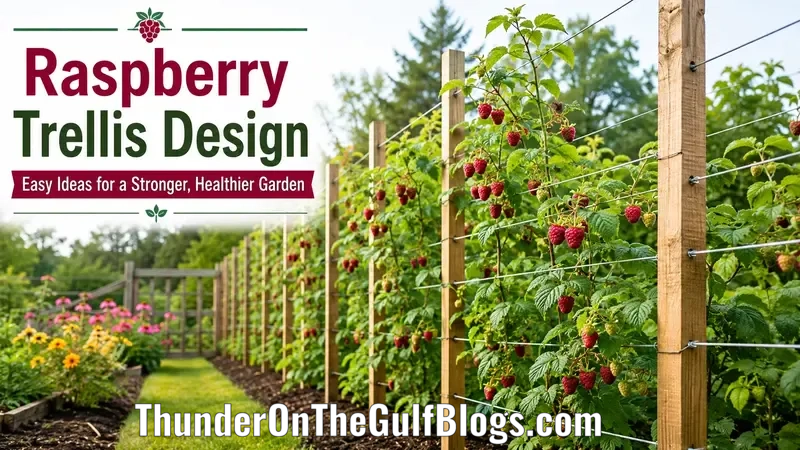
Growing raspberries at home can be rewarding, but these productive plants often need proper support to grow neatly and produce healthy fruit. A well-planned raspberry trellis design helps keep canes upright, improves airflow, makes pruning easier, and lets sunlight reach more of the plant. It can also make harvesting much more convenient while keeping the garden organized.
Several simple trellis options exist for raspberry plants, from basic single-wire supports to stronger two-wire and post-and-wire systems. The best choice depends on your garden space, raspberry variety, plant size, and how many canes you want to support. You do not need expensive materials to create an effective trellis. Wooden posts, garden wire, and a few basic tools can often provide everything needed for a practical setup.
This guide explores easy raspberry trellis design ideas that can help you create a stronger, healthier, and more productive garden. With the right support, your raspberry plants can grow with better structure and easier maintenance.
Why Do Raspberry Plants Need a Trellis?
Raspberry canes can become tall, flexible, and heavy when they produce leaves and fruit. Without support, they may bend toward the ground or spread into nearby garden areas.
A trellis gives the canes a structure to grow against. It keeps the plants more organized and can make routine gardening tasks easier.
A good support system can help with:
- Keeping raspberry canes upright
- Improving air circulation
- Allowing better sunlight exposure
- Making pruning easier
- Making harvesting more convenient
- Keeping pathways clear
- Reducing tangled growth
- Supporting fruit-heavy canes
Trellising is especially useful when growing several raspberry plants in a row.
Choosing the Right Raspberry Trellis Design
The best raspberry trellis design depends on the type of raspberry you grow and the available space in your garden. Before building one, consider the mature height of the plants, the number of canes, and how much room you have between rows.
You should also think about maintenance. A complicated structure may look impressive, but a simple design that is easy to repair and prune can be more practical for a home garden.
Here are some popular options to consider.
1. Single-Wire Raspberry Trellis
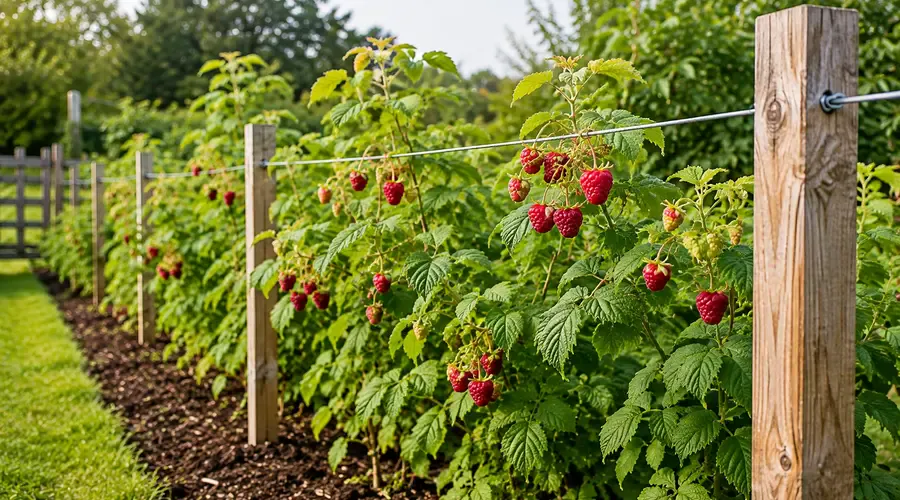
A single-wire trellis is one of the simplest ways to support raspberry canes.
Install sturdy posts at both ends of the raspberry row and attach strong garden wire between them. Add posts along longer rows to prevent the wire from sagging.
This design works well for smaller gardens because it requires relatively few materials.
Benefits of a Single-Wire Trellis
- Simple to build
- Affordable materials
- Easy to maintain
- Suitable for short rows
- Takes up little garden space
The main limitation is that a single wire may provide less support when plants become heavily loaded with fruit.
2. Two-Wire Raspberry Trellis
A two-wire system provides more support and is a popular choice for home raspberry gardens.
Attach one wire on each side of the row. The canes can grow between or toward the wires, creating a wider structure.
This arrangement can help separate the canes and improve airflow through the planting area.
It also gives gardeners better access when pruning or harvesting.
3. T-Post Trellis Design
A T-shaped trellis uses posts with horizontal arms at the top. Wires are attached to both ends of the horizontal arms.
This creates a wider support system that holds raspberry canes away from the center of the row.
A T-post design can be useful when you have several plants and want a strong structure.
Why Choose a T-Post Design?
The wider shape can help spread the canes outward. This may make it easier to reach the fruit and manage new growth.
It can also help prevent branches from crowding the center.
4. Wooden Post and Wire Trellis
For gardeners who prefer a traditional appearance, wooden posts combined with strong garden wire can create an attractive raspberry support.
Choose sturdy, weather-resistant posts and place them securely in the soil. Run wire between the posts at appropriate heights for your raspberry variety.
This design can blend naturally into vegetable gardens and backyard landscapes.
Make sure the posts are strong enough to handle the weight of mature plants and fruit.
5. DIY Raspberry Trellis With Garden Stakes
If you have only a few raspberry plants, you may not need a large permanent structure.
Several sturdy garden stakes can provide basic support. Place the stakes around the plants and use soft garden ties to secure the canes.
This option is particularly useful for small gardens, raised beds, or temporary plant support.
Avoid tying the canes too tightly. Leave enough room for natural movement and growth.
6. Fence-Style Raspberry Trellis
A fence-style trellis can be a practical choice for gardeners growing raspberries along the edge of a property or garden.
Posts are positioned in a straight line, with horizontal wires connecting them. The raspberry canes grow along the supported row.
This design uses narrow spaces while keeping the plants contained.
However, leave enough distance from walls and fences to maintain good airflow and allow access for maintenance.
How to Build a Simple Raspberry Trellis
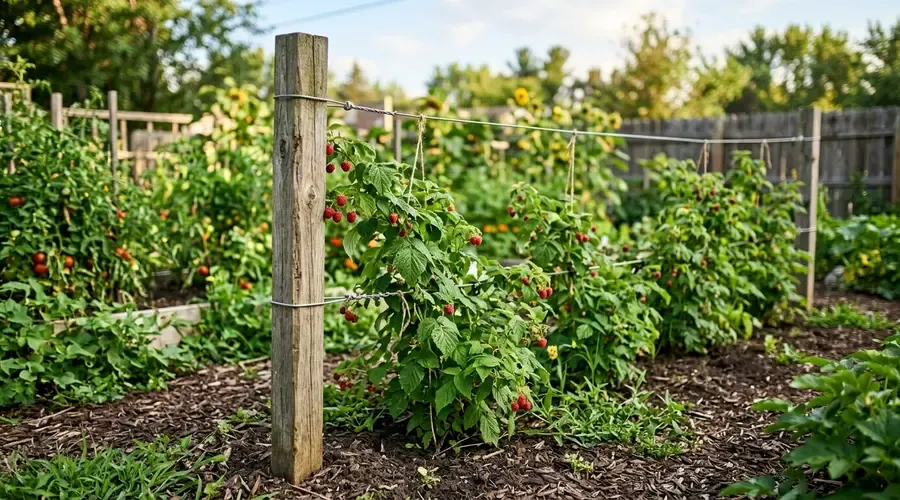
Building a basic raspberry trellis does not require advanced construction skills. A few common gardening materials can create a reliable support system.
Materials You May Need
- Strong wooden or metal posts
- Galvanized garden wire
- Wire cutters
- Measuring tape
- Garden ties
- Hammer or post-setting tools
- Protective gloves
Step 1: Choose the Location
Select a sunny location with suitable soil and good drainage.
Raspberries generally perform best with plenty of sunlight. Avoid placing the row where surrounding plants or structures create excessive shade.
Step 2: Mark the Trellis Line
Decide where the raspberry row will grow. Keep the line straight if you are planting multiple plants.
A straight row makes it easier to install posts and maintain the plants later.
Step 3: Install Strong Posts
Place sturdy posts at both ends of the row. For longer rows, add intermediate posts for additional support.
Install the posts firmly so they don’t lean as the plants become heavy.
Step 4: Attach the Wire
Run strong garden wire between the posts.
For a two-wire system, install wires on opposite sides of the raspberry row. The exact height can depend on your plant variety and expected cane growth.
Step 5: Guide the Canes
Once the plants grow, gently guide the canes toward the support.
Use soft ties when necessary. Do not use thin wire or materials that can cut into the stems.
How High Should a Raspberry Trellis Be?
There is no single perfect height for every raspberry plant. The ideal height depends on the variety and its mature cane length.
Many home gardeners use a support system with wires at different heights rather than relying on a single support point.
The lower wire can support younger or lower-growing canes, while the upper wire supports taller growth.
The goal is to keep the canes upright without forcing them into an unnatural position.
Best Materials for a Raspberry Trellis
Choosing durable materials can help your trellis last for several growing seasons.
Wood
Wooden posts provide a natural appearance and can create a sturdy structure. Select durable outdoor-rated wood and install the posts securely.
Metal
Metal posts are strong and can last for many years. They are particularly useful for longer raspberry rows.
Galvanized Wire
Galvanized wire is commonly used because it is strong and designed to withstand outdoor conditions.
Garden Ties
Soft garden ties are useful for securing individual canes. Choose flexible ties that will not damage the stems as they grow.
Tips for Maintaining Raspberry Plants on a Trellis
Installing a trellis is only part of successful raspberry care. Regular maintenance helps keep the plants productive and manageable.
Prune Regularly
Remove old, weak, damaged, or unwanted canes according to the pruning needs of your raspberry variety.
Good pruning reduces crowding and allows the remaining canes to receive better airflow and sunlight.
Keep Canes Organized
Guide canes along the trellis instead of allowing them to grow randomly through the garden.
Organized growth makes harvesting and pruning much easier.
Check the Wires
Inspect the wires periodically. If they become loose or sag, tighten or adjust them.
A strong support system should remain stable throughout the growing season.
Remove Damaged Growth
Check your plants regularly for broken or damaged canes. Removing problematic growth can help keep the planting area tidy.
Keep the Base Area Clear
Remove excessive weeds and unwanted growth around the raspberry plants. A clean planting area makes it easier to inspect the plants and perform maintenance.
Common Raspberry Trellis Mistakes to Avoid
Even a simple trellis can cause problems if it is poorly designed or installed.
Using Weak Posts
Raspberry plants become heavier as they mature. Weak posts can lean or collapse under the weight.
Installing Wires Too Loosely
Loose wires may fail to support the canes properly. Check the tension regularly.
Tying Canes Too Tightly
Tight ties can restrict growth and damage stems. Use soft, flexible ties and allow some movement.
Making the Trellis Too Narrow
If the structure does not provide enough space, canes can become crowded. Choose a design that gives the plants enough room to spread naturally.
Ignoring Plant Variety
Different raspberry varieties have different growth habits. Consider the expected mature size before selecting your trellis dimensions.
Raspberry Trellis Ideas for Small Gardens
You do not need a large backyard to grow raspberries.
For a small garden, consider a compact two-post trellis, a narrow fence-style support, or a few sturdy stakes.
Growing raspberries vertically can help keep the plants organized and make better use of limited space.
A small trellis can also make it easier to harvest berries without stepping into the planting area.
Raspberry Trellis Ideas for Large Gardens
Gardeners with more space can create longer post-and-wire systems.
For multiple rows, leave enough space between rows for walking, pruning, harvesting, and other maintenance tasks.
A well-planned layout matters more than building the largest possible trellis. Make sure every plant remains accessible.
How a Trellis Can Improve Harvesting
One of the biggest advantages of supporting raspberry plants is easier harvesting.
When canes remain upright and organized, ripe berries are easier to see and reach. You are less likely to step on low-growing branches or disturb other plants while picking fruit. A trellis can also keep fruit-bearing canes from becoming tangled with surrounding vegetation. For more information, click here.
Final Thoughts
A well-designed raspberry trellis can make a noticeable difference in the way your garden looks and functions. By giving raspberry canes reliable support, you can keep plants organized, improve access to the fruit, and make pruning and maintenance easier.
You do not need an expensive or complicated structure. A simple post-and-wire system, two-wire trellis, T-shaped support, or even sturdy garden stakes can work well when matched to your plants and available space.
The most important factors are strong support, proper spacing, durable materials, and regular maintenance. Choose a raspberry trellis design that fits your garden rather than simply copying a complicated setup.
With thoughtful planning and consistent care, a simple trellis can help create a cleaner, stronger, and healthier raspberry garden for seasons to come.