
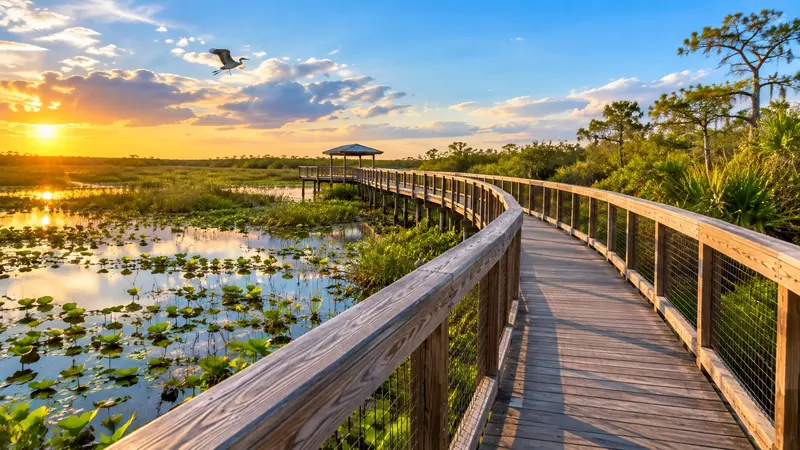
The Everglades Elevated Boardwalk offers visitors a simple, memorable way to experience South Florida’s unique landscapes. Instead of walking directly through sensitive wetlands, elevated boardwalks let visitors explore marshes, sloughs, hardwood hammocks, and other habitats while staying on designated paths. Everglades National Park has several boardwalk experiences, including the famous Anhinga Trail, Pa-Hay-Okee Overlook, Mahogany Hammock, West Lake, and Bobcat Boardwalk.
These trails provide opportunities to observe wildlife, photograph scenery, and learn more about the Everglades ecosystem. Depending on the location and season, visitors may encounter alligators, turtles, wading birds, fish, anhingas, and other wildlife. The elevated perspective can also make it easier to appreciate the enormous freshwater landscape known as the “River of Grass.”
Table of Contents
- What Is the Everglades Elevated Boardwalk?
- Why Explore an Everglades Boardwalk?
- Wildlife You May Encounter
- Scenic Views and Natural Landscapes
- Popular Boardwalk Experiences
- Best Time to Visit
- Tips for a Comfortable Visit
- Photography and Nature Watching
- Protecting the Everglades
- Conclusion
What Is the Everglades Elevated Boardwalk?
The term Everglades Elevated Boardwalk can describe the raised walking experiences found throughout Everglades National Park. These structures let visitors move through wetland and forest environments without leaving designated trails.
One notable example is the Anhinga Trail, which combines a paved path with an elevated boardwalk over sawgrass marsh and freshwater slough. The trail is about 0.8 miles round trip and is known for wildlife viewing.
Another excellent example is Pa-Hay-Okee Overlook, where a short 0.16-mile boardwalk leads to a raised observation platform with expansive views across the River of Grass.
Why Explore an Everglades Boardwalk?
Boardwalks provide a convenient way to experience an environment that can otherwise be difficult to explore on foot. The raised design gives visitors access to wetlands, forests, and waterways while keeping the walking route clearly defined.
For travelers interested in nature, these trails can provide several experiences in one visit:
- Wildlife watching
- Bird photography
- Scenic views
- Nature walks
- Educational opportunities
- Accessible outdoor recreation
- Sunrise and sunset viewing
The National Park Service describes several Everglades boardwalks as key places to experience the park’s different habitats.
Wildlife You May Encounter
One of the biggest attractions of an Everglades boardwalk is the chance to see wildlife in its natural habitat.
Along the Anhinga Trail, visitors may see alligators, fish, turtles, anhingas, herons, egrets, and other birds. Wildlife viewing varies with weather, water levels, season, and time of day.
The Shark Valley area also offers opportunities to see animals such as alligators, herons, egrets, deer, turtles, and snail kites.
Remember that wildlife is wild. Visitors should keep a safe distance, stay on designated paths, and never feed or approach animals.
Scenic Views and Natural Landscapes
The Everglades is famous for its broad, open landscapes, and elevated viewpoints can make these surroundings especially impressive.
At Pa-Hay-Okee, the raised observation platform provides sweeping views of the River of Grass, including surrounding vegetation such as dwarf cypress, magnolia, air plants, and string lilies.
The slight elevation of a boardwalk can also change what visitors see. From above the wetland surface, it becomes easier to appreciate the relationship between open water, sawgrass, trees, and distant vegetation.
For photographers, these landscapes offer opportunities for wide scenic images and close-up photos of plants and wildlife.
Popular Boardwalk Experiences
Anhinga Trail
The Anhinga Trail is one of the park’s best-known wildlife-viewing walks. It passes through sawgrass marsh and freshwater slough and includes a looping boardwalk. The trail is flat and wheelchair accessible.
Pa-Hay-Okee Overlook
Pa-Hay-Okee provides a short boardwalk experience leading to a raised observation area overlooking the River of Grass. The National Park Service reports that the overlook and boardwalk reopened in winter 2026 following renovations focused on safety, accessibility, and durability.
Mahogany Hammock
The Mahogany Hammock Trail is a raised boardwalk through a tropical hardwood hammock. It provides a different perspective from the open wetlands, with dense vegetation surrounding the walking route.
Bobcat Boardwalk
Located in the Shark Valley area, Bobcat Boardwalk is a self-guided trail through sawgrass slough and tropical hardwood forest. The trail is approximately 0.5 miles one way and is wheelchair accessible.
Best Time to Visit
You can visit the Everglades year-round, but conditions and wildlife activity change with the seasons.
According to the National Park Service, wildlife along the Anhinga Trail is generally most abundant during the cooler and drier months from December through March. During summer, early morning can be a useful time for wildlife viewing because temperatures are lower and some animals are more active.
Before traveling, visitors should check official park information for current conditions, closures, weather, and trail updates.
Tips for a Comfortable Visit
A little preparation can make an Everglades boardwalk adventure more enjoyable.
| What to Bring | Why It Helps |
|---|---|
| Drinking water | Helps you stay hydrated |
| Sun protection | Useful in South Florida’s strong sunshine |
| Insect repellent | Mosquitoes and biting flies may be present |
| Comfortable shoes | Makes walking easier |
| Hat and light clothing | Provides protection from the sun |
| Camera or binoculars | Useful for wildlife and scenery |
| Park information | Helps you understand trail conditions |
The National Park Service recommends carrying plenty of water and preparing for insects, strong sun, heat, humidity, and changing weather conditions.
Photography and Nature Watching
An elevated boardwalk creates excellent opportunities for nature photography by providing different perspectives of the landscape. Early morning can offer soft light, while later in the day can reveal changing colors across the marsh.
When photographing wildlife, patience is often more valuable than getting close. Use a zoom lens or binoculars when possible, and let animals move naturally.
A boardwalk visit is also a good opportunity to slow down. Instead of walking straight from one end to the other, stop occasionally to watch movement in the water, listen for birds, and examine the plants along the trail.
Protecting the Everglades
The Everglades is a complex ecosystem that includes freshwater marshes, mangrove forests, coastal areas, and many plant and animal species. The National Park Service reports hundreds of bird species and numerous mammal, reptile, amphibian, fish, and plant species within the park.
Visitors can help protect this environment by staying on designated trails, carrying out their trash, avoiding wildlife interactions, and following park regulations.
Using boardwalks responsibly is more than a convenient way to explore. It also helps visitors experience sensitive environments while keeping their activities concentrated along established routes. Learn More About Traveling Tips.
Conclusion
The Everglades Elevated Boardwalk experience offers an accessible and engaging way to discover one of Florida’s most distinctive natural environments. From wildlife-rich trails such as Anhinga to scenic viewpoints such as Pa-Hay-Okee, the park’s raised walkways reveal different sides of the Everglades.
Whether you’re interested in photography, birdwatching, outdoor travel, or simply enjoying a peaceful walk surrounded by nature, an Everglades boardwalk can offer memorable views and opportunities to observe wildlife. With comfortable clothing, plenty of water, insect protection, and respect for park rules, visitors can enjoy the wetlands while helping preserve them for future generations.