
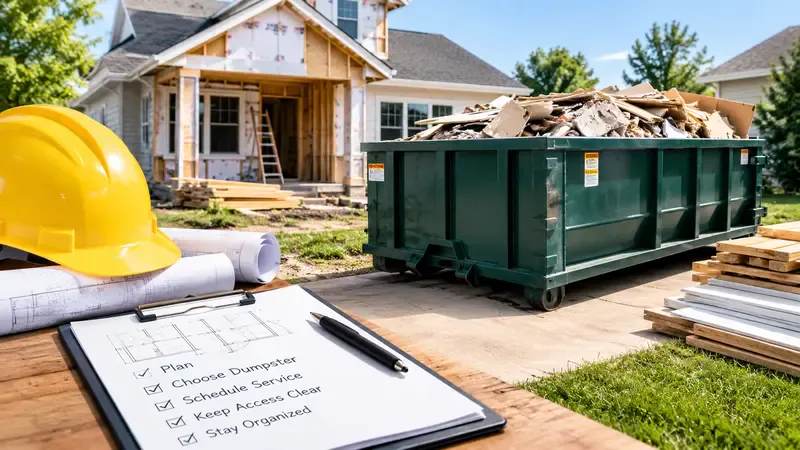
A home remodel rarely produces the same kind of debris from beginning to end. Early demolition may generate cabinets, drywall, flooring, tile, and fixtures, while later stages create packaging, wood cutoffs, trim, damaged materials, and smaller amounts of finish debris. Because the waste stream changes as the project progresses, dumpster planning should change with it.
Homeowners who think about disposal only at the beginning of a remodel may end up with a container that is inconvenient, full at the wrong time, or in the way of later work. A better approach is to coordinate dumpster use with each remodeling phase so debris can leave the property without slowing contractors, blocking deliveries, or interfering with daily life.
Phase One: Planning Before Construction Starts
Dumpster planning should begin before demolition. Homeowners and contractors should review which rooms are being remodeled, what materials are being removed, and how long the work is expected to last.
A kitchen remodel may generate cabinets, countertops, flooring, drywall, and appliances. A whole-house project may also involve bathrooms, interior walls, doors, insulation, and trim.
Understanding the full scope helps determine when the largest waste volumes are likely to occur and whether one container can serve the entire project or whether service will be needed between phases.
Choose Placement for More Than Demolition
The best dumpster location is not always the closest available spot to the first room being demolished. Homeowners should consider how the driveway, garage, side yard, and entrances will be used during the entire remodel.
Working with Temporary Dumpster can help homeowners coordinate residential dumpster placement and timing around renovation activity. The goal is to keep disposal convenient without blocking contractor vehicles, material deliveries, or essential household access.
A location that works during demolition should still be practical once new products begin arriving.
Phase Two: Initial Demolition
Demolition usually creates the most debris in the shortest period. Cabinets, drywall, flooring, old fixtures, doors, trim, and other materials may come out rapidly once crews begin.
This phase requires enough dumpster capacity to keep debris from piling up inside the home or across the driveway. Establish the route from the work area to the container before demolition begins.
If waste has nowhere to go, crews may start creating temporary piles that eventually require a second round of handling.
Keep Demolition Routes Open
Home remodeling often takes place while at least part of the property remains occupied. Contractors may need to move debris through hallways, garages, side doors, or exterior gates.
Keep these routes clear of furniture, tools, new materials, toys, and household belongings. Floors and door frames may need protection where heavy debris is being carried repeatedly.
A clear route helps demolition move faster and limits dust and debris from spreading into living areas outside the project.
Separate Heavy Materials Early
Some remodels involve tile, plaster, concrete, brick, stone, or other dense materials. These can create weight concerns much faster than lightweight wood or drywall.
Homeowners should not assume they can fill all open dumpster space simply because the container does not look full. Heavy materials may need separate planning depending on the amount being removed.
Identifying them before demolition makes it easier to avoid loading problems later.
Phase Three: Structural and Rough Work
Once major demolition is complete, the waste stream usually changes. Framing, plumbing, electrical, HVAC, and structural work may generate lumber scraps, pipe cutoffs, wire, packaging, insulation, and smaller amounts of removed building material.
The volume may be lower than during demolition, but debris still needs to leave active work zones regularly.
At this stage, the dumpster may remain useful even if it is no longer filling as quickly. The focus shifts from handling large demolition loads to preventing smaller materials from cluttering work areas.
Protect Access for Trade Contractors
Rough construction often brings several trades to the home in a short period. Electricians, plumbers, HVAC technicians, framers, and inspectors may all need access to the same rooms.
Do not allow debris to collect in front of panels, utility areas, wall openings, or mechanical equipment. Contractors need clear access to perform installations and inspections.
Regular cleanup during this phase helps prevent one trade’s leftovers from slowing the next crew.
Phase Four: Material Delivery and Installation
As reconstruction begins, the property may receive drywall, flooring, cabinets, doors, windows, tile, fixtures, and other new materials. Dumpster placement becomes especially important because delivery and storage space may be limited.
Incoming products should not have to compete with outgoing debris for the same part of the driveway or garage.
Whenever possible, homeowners and contractors should remove major demolition waste before large deliveries arrive. This creates cleaner staging areas and reduces unnecessary movement of new materials.
Watch Packaging Waste
Installation work often produces large amounts of cardboard, foam, plastic wrap, pallets, and protective packaging. These materials may be lightweight but can quickly fill dumpster space.
Breaking down appropriate packaging can make loading more efficient. Crews should also avoid allowing empty boxes to collect throughout the house.
Regularly removing packaging helps keep newly finished areas from becoming cluttered while the remodel progresses.
Phase Five: Drywall and Interior Finishes
Drywall installation and finishing create a different cleanup pattern. Cutoffs, broken pieces, empty compound containers, sanding residue, trim scraps, flooring offcuts, and packaging may all appear over several days or weeks.
At this stage, debris volume is usually more gradual. The dumpster may not need constant service, but it should remain accessible.
Contractors can benefit from short cleanup periods at the end of each workday so materials don’t accumulate in rooms nearing completion.
Keep Finished Areas Separate From Debris
As more rooms reach the finish stage, space for waste staging decreases. Newly installed floors, cabinets, trim, and fixtures need protection.
Debris routes may need to change so workers don’t carry waste through completed areas unnecessarily. A side entrance, garage, or alternate path may become more practical than the original route.
Dumpster planning should adapt as the home’s condition changes.
Phase Six: Exterior Work
Some remodeling projects expand outside the home. Siding, roofing, decks, porches, windows, landscaping, or exterior structures may be part of the same renovation.
This can create another jump in debris volume after interior work has slowed. Long boards, siding pieces, shingles, trim, and old decking can consume substantial dumpster space.
If exterior work is scheduled late in the project, homeowners should make sure enough capacity remains rather than assuming the original container will still handle everything.
Reevaluate Capacity Between Major Phases
One of the most useful times to review dumpster needs is at the end of each major remodeling phase. Demolition, rough work, installation, and finish work each produce different amounts and types of debris.
If the container is nearly full after demolition, arranging service before the next phase prevents the site from running out of disposal space.
A planned pickup or replacement is easier to manage than discovering halfway through installation that crews have nowhere to put new waste.
Keep Pickup Access Available
Residential projects often become more crowded as work continues. Contractor trucks, trailers, delivered materials, temporary storage, and homeowner vehicles may gradually occupy the driveway.
The dumpster still needs clear access for removal or replacement. Homeowners and contractors should avoid placing materials or parking vehicles where they will block service.
Before scheduled pickup, check the route so the container can be removed without a last-minute site rearrangement.
Phase Seven: Punch-List Work
Near the end of the remodel, debris volume usually decreases but does not disappear. Finish carpentry, touch-up work, fixture installation, hardware changes, and repairs can still produce packaging, wood scraps, damaged materials, and other waste.
Removing the dumpster too early may leave contractors without a practical disposal option during these final tasks.
It often makes sense to keep the container through the main punch-list period, especially if several trades still have work to complete.
Plan Final Pickup Carefully
Final dumpster removal should happen after the last significant debris-producing work but before the property is fully returned to normal use.
Before pickup, inspect the garage, driveway, side yard, work areas, and debris routes for leftover scraps. Small pieces of trim, packaging, fasteners, tile, and wood may remain after the major waste is gone.
A final site cleanup helps the remodel feel complete, not just finished from a construction standpoint.
Avoid Treating Every Phase the Same
A common mistake is assuming one waste strategy will work from the first demolition day through final completion. Remodeling conditions change too much for that.
Early phases require high capacity and fast removal. Middle phases require organization around deliveries and multiple trades. Final phases require protecting finished spaces and avoiding premature dumpster removal.
Homeowners who adjust the disposal plan as the project evolves can avoid many common cleanup problems.
Residential dumpster planning changes throughout a home remodel because the type, volume, and location of debris change from phase to phase. Demolition creates large quantities quickly, rough work produces smaller construction scraps, installation brings packaging, and finish work requires cleanup around increasingly completed spaces.
By choosing placement carefully, keeping debris routes open, monitoring capacity, coordinating service with major milestones, and keeping the dumpster available through final cleanup, homeowners can support a smoother renovation. Treating waste removal as part of each phase helps prevent debris from becoming an obstacle to the remodel itself.
Final Thoughts
Overall, effective residential dumpster planning can make a home remodeling project cleaner, safer, and more organized. Since debris changes throughout demolition, construction, installation, and finishing, homeowners should adjust dumpster capacity, placement, and pickup schedules as each phase progresses. By planning ahead, keeping access routes clear, monitoring waste levels, and coordinating removal at the right time, homeowners can reduce delays and unnecessary cleanup. A flexible waste-management plan keeps debris under control from the first demolition task through the final punch-list work, helping the entire remodeling project move toward completion more smoothly. For mor about Home Related Tips and Renovation.