
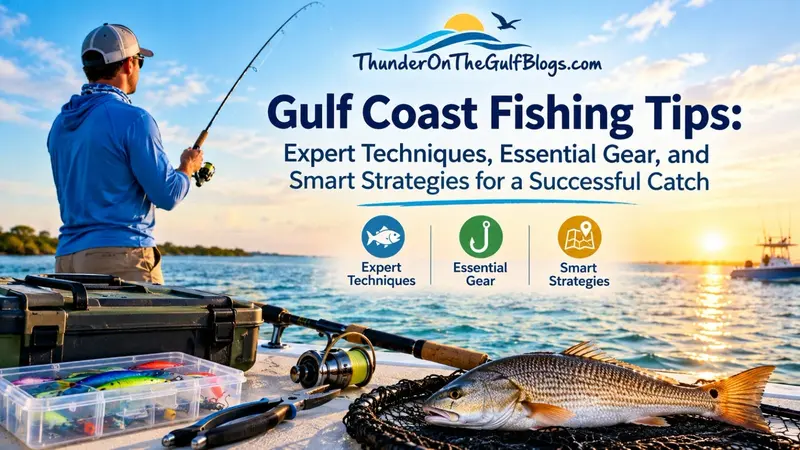
The Gulf Coast offers excellent fishing opportunities, from peaceful inshore waters and coastal bays to productive fishing spots near beaches, passes, and offshore reefs. Whether you are planning a weekend fishing trip with family or looking to improve your angling skills, understanding local conditions and choosing the right equipment can make your experience more enjoyable and productive.
Successful fishing involves more than simply casting a line and waiting for a bite. Tides, weather, water temperature, bait selection, and fish behavior can significantly affect your results. With the right preparation and a few practical techniques, anglers can make better decisions and spend more time fishing effectively.
In this guide, you will discover useful Gulf Coast fishing tips, learn how to choose essential gear, explore effective bait and presentation methods, and plan a safer, more rewarding fishing adventure.
1. Understand Gulf Coast Fishing Conditions
One of the most important steps toward successful fishing is learning how local conditions affect fish activity. The Gulf Coast features a variety of environments, including shallow flats, grass beds, estuaries, marshes, beaches, and deeper offshore waters. Each habitat supports different species and requires a slightly different approach.
Before leaving home, check the local weather forecast, wind direction, water conditions, and tide predictions. Moving water can bring baitfish into productive feeding areas, particularly around channels, oyster beds, grass edges, and other underwater structures.
Water clarity also matters. In clearer water, fish may be more cautious, so natural-looking bait presentations can work well. In murky water, anglers can experiment with scented baits, stronger vibrations, or lures that create noticeable movement.
Pay attention to seasonal changes. Fish distribution and feeding patterns can shift with water temperature, rainfall, and spawning cycles. Researching the species available in your chosen location will help you choose appropriate equipment and techniques.
2. Choose the Right Fishing Gear
You do not need an expensive collection of equipment to enjoy Gulf Coast fishing. A dependable setup that matches your target species, fishing location, and preferred technique is often enough.
Fishing Rod and Reel
For many inshore fishing situations, a medium or medium-light spinning rod paired with a suitable spinning reel is a practical choice. This combination offers versatility for casting artificial lures, fishing with live bait, and targeting species such as redfish, spotted seatrout, and flounder where locally available.
For larger fish, stronger currents, surf fishing, or offshore trips, you may need heavier tackle and a reel with greater line capacity. Choose equipment according to the expected fish size rather than assuming one setup works everywhere.
Fishing Line and Leader
Braided line offers good sensitivity and strength for its diameter, making it useful when fishing around grass beds and structure. A fluorocarbon or monofilament leader protects against abrasion and provides a reliable connection between the main line and the hook or lure.
The appropriate line strength depends on your target species, underwater obstacles, and fishing conditions. Always check your knots before casting, especially when targeting powerful fish.
Hooks, Weights, and Terminal Tackle
Carry a selection of hooks, swivels, sinkers, and jig heads in suitable sizes. Circle hooks can be a useful option for many bait-fishing situations, particularly when used correctly. Regulations may require specific hook types for certain species or fishing methods, so check the rules for your destination.
Organize your tackle in a waterproof or water-resistant box. Keeping frequently used items accessible saves time and makes it easier to switch techniques as conditions change.
3. Select the Best Bait for Your Target Species
Bait selection is another important factor in Gulf Coast fishing. The best option depends on the fish you want to catch, the season, the water conditions, and whether you are fishing from shore, a pier, a kayak, or a boat.
Live Bait
Live shrimp, small baitfish, and other locally available bait species can be effective for several popular Gulf Coast game fish. Shrimp are particularly versatile in many inshore environments, while appropriately sized baitfish may attract predatory species.
Keep live bait in suitable water conditions and avoid overcrowding bait containers. Healthy, active bait generally presents more naturally than stressed bait.
Artificial Lures
Soft plastic shrimp, paddle-tail swimbaits, jigs, spoons, and topwater plugs give anglers plenty of options. Soft plastics can work well around grass edges and shallow flats, while spoons and other casting lures can cover more ground.
Topwater lures can produce exciting strikes when predatory fish feed near the surface. However, their effectiveness varies with light, weather, water conditions, and fish activity.
Experiment with different colors, retrieval speeds, and lure sizes. If fish are reluctant to bite, slow your presentation or change depth.
Natural Bait
Cut bait can work well when targeting bottom-feeding or predatory species. When possible, choose fresh bait, and use a presentation that matches the current and the fish you are targeting.
Always follow local rules governing bait collection, transportation, and the use of live or non-native species.
4. Use Tides and Timing to Your Advantage
Tides influence water movement, baitfish activity, and feeding opportunities. Although fish can bite at many tidal stages, moving water often concentrates food around channels, points, passes, and underwater structures.
Study a tide chart before your trip and identify areas where incoming or outgoing water moves past likely feeding locations. Instead of fishing randomly, concentrate on places where baitfish may be carried toward waiting predators.
Early morning and late afternoon can provide productive fishing conditions, especially during warmer months when temperatures are high. Reduced light may encourage some species to feed closer to shore or in shallower water.
Night fishing can also be productive in suitable locations, including certain piers, passes, and coastal areas. However, carefully consider visibility, boat traffic, weather, and local access restrictions.
Remember that tide charts are planning tools rather than guarantees. Wind, freshwater runoff, atmospheric conditions, and local geography can affect actual water levels and currents.
5. Identify Productive Fishing Locations
Finding fish often matters more than changing lures repeatedly. Look for areas that provide food, shelter, suitable water depth, or a combination of these features.
Grass beds and shallow flats: These habitats can support baitfish and attract redfish and spotted seatrout. Move quietly in shallow water to avoid disturbing fish that are feeding.
Oyster beds and channel edges: These areas provide structure and breaks in the current. Fish the edges carefully, because oyster shells can damage fishing line.
Piers and jetties: Pilings and rocks attract marine life and create places where fish may feed. Be mindful of other anglers, strong currents, slippery surfaces, and restricted access.
Beaches and surf zones: Surf fishing can produce a variety of catches depending on the season, local conditions, and target species. Observe waves and currents before entering the water, and choose tackle suited to the surf.
Estuaries and marshes: These environments can offer excellent inshore fishing opportunities. Focus on creek mouths, deeper channels, marsh drains, and areas where moving water concentrates bait.
Research public fishing access and local restrictions before choosing a spot. A productive location is only a good choice if fishing is permitted and you can reach it safely.
6. Improve Your Casting and Retrieval Techniques
Good technique helps present bait naturally and cover water efficiently. You do not need advanced skills to get started, but practicing a few fundamentals can improve your results.
Make Accurate Casts
Practice casting toward specific targets rather than focusing only on distance. Casting near grass edges, channel boundaries, or visible baitfish can work better than throwing as far as possible without a clear plan.
Avoid creating unnecessary noise when approaching shallow fishing areas. Fish in clear, shallow water may become wary when they detect sudden movement or repeated disturbances.
Vary Your Retrieval Speed
When using artificial lures, start with a steady retrieve and adjust as needed. Try short pauses, gentle twitches, or slower movements to imitate injured or fleeing prey.
If fish follow a lure without striking, experiment with its speed, depth, or profile. Small adjustments can sometimes trigger a response.
Maintain Line Control
Keep enough tension to detect bites without pulling the lure unnaturally. When a fish strikes, respond according to the hook type and fishing method. Circle hooks generally work best with steady pressure rather than an aggressive, traditional hook-setting motion.
Once hooked, maintain controlled pressure and avoid forcing the fish into obstacles. Proper drag settings, reliable knots, and calm handling help reduce lost fish.
7. Check Weather, Water, and Safety Conditions
Fishing conditions can change quickly along the Gulf Coast. Before leaving, review forecasts for thunderstorms, wind, heat, and other hazards. Pay particular attention to small-craft advisories if you plan to fish from a boat.
Carry drinking water, sun protection, appropriate clothing, a first-aid kit, and a fully charged phone. Boaters should have the required safety equipment, including properly fitted life jackets. A communication device suitable for the location is also valuable.
Be cautious around rip currents, jetties, slippery rocks, and changing tides. Never assume conditions will remain calm all day.
After heavy rainfall, consider possible changes in water quality, runoff, and visibility. Follow local advisories and avoid fishing in areas affected by pollution or other hazards.
For boat or kayak trips, share your route and expected return time with someone you trust. Check your equipment before departure and avoid taking unnecessary risks to reach a promising fishing spot.
8. Follow Fishing Regulations and Practice Conservation
Responsible fishing helps protect Gulf Coast ecosystems and supports future fishing opportunities. Before your trip, check the current regulations for the state and waters where you plan to fish.
Rules may cover fishing licenses, minimum and maximum sizes, daily bag limits, seasonal closures, protected species, and permitted gear. Requirements can differ between state and federal waters, so verify the rules for your exact location.
Handle fish carefully, especially when releasing them. Wet your hands before touching a fish, minimize its time out of water, and use appropriate tools to remove hooks. If a hook is deeply embedded, avoid pulling forcefully, which can cause additional injury.
Use a landing net when appropriate, and support a fish’s body during handling. Release it promptly when required or when you choose to practice catch-and-release fishing.
Dispose of fishing line, hooks, bait containers, and other waste properly. Discarded fishing line can entangle wildlife, while lost tackle can injure fish, birds, and other coastal animals.
Respect private property, designated conservation areas, and other anglers. Good fishing practices help keep coastal waters enjoyable for everyone.
9. Prepare a Practical Gulf Coast Fishing Checklist
A little preparation can prevent common problems and make a fishing trip more comfortable. Use this checklist before heading out:
-
Fishing rod, reel, and suitable fishing line
-
Extra leaders, hooks, weights, and terminal tackle
-
Live bait or artificial lures suited to the target species
-
Pliers, line cutters, and a measuring tool
-
Current fishing license, where required
-
Tide information and an updated weather forecast
-
Drinking water, snacks, and sun protection
-
First-aid supplies and a charged phone
-
Appropriate footwear and protective clothing
-
A cooler, if keeping legal catches
-
A landing net and fish-handling tools
-
A bag for collecting litter and discarded line
Adjust this list to your fishing method. Shore anglers may need different equipment from kayak anglers or offshore boaters, and overnight trips require additional planning.
10. Common Gulf Coast Fishing Mistakes to Avoid
Even experienced anglers can make mistakes that reduce their chances of success. Avoiding a few common problems can help you fish more efficiently.
Ignoring local conditions: Fishing at a familiar spot without checking tides, wind, or recent weather may lead to poor results. Review current conditions before deciding where to go.
Using unsuitable tackle: Too-light gear may struggle with powerful fish or heavy structure, while overly heavy gear can make casting smaller lures difficult. Match your setup to the conditions.
Changing too many things at once: If you are not getting bites, adjust one variable at a time, such as lure speed, depth, or location. This makes it easier to identify what works.
Fishing without a plan: Choose a target species, identify several potential locations, and decide which techniques to try first. A simple plan helps you use your time wisely.
Overlooking regulations: Never assume the rules are the same at every Gulf Coast destination. Verify licensing requirements, size limits, bag limits, and seasonal restrictions before keeping a fish.
Neglecting patience: Fishing naturally involves periods of inactivity. Watch the water, look for signs of baitfish, and learn from each trip instead of judging success only by how many fish you catch.
11. How to Plan a More Successful Fishing Trip
A successful trip begins before you reach the water. Start by selecting a location that matches your experience level and the species you want to target. Research public access points, parking arrangements, local fishing rules, and any restrictions that could affect your plans.
Next, review the weather and tides. Choose a suitable time window and prepare a backup location in case conditions change. Pack only the tackle you’ll likely need, but carry enough essentials to handle unexpected problems.
When you arrive, spend a few minutes observing the water. Look for baitfish, birds feeding near the surface, current changes, and areas where water moves around structure. Begin with a suitable technique, then make adjustments based on what you observe.
Keep simple notes about the location, tide stage, weather, bait, and catches. Over time, these records can help you recognize patterns and make better decisions on future trips.
Most importantly, set realistic expectations. Some days produce excellent catches, while others offer more opportunities to learn. Enjoying the experience, improving your skills, and respecting the environment are all key to successful fishing. Learn more about Fishing Tips.
Conclusion
Gulf Coast fishing becomes more rewarding when anglers combine thoughtful preparation with practical techniques. Understanding tides and weather, choosing the right gear, selecting suitable bait, and identifying productive habitats can help you make the most of your time on the water.
Whether you prefer fishing from a beach, pier, kayak, or boat, start with the fundamentals and adjust your approach to local conditions. Check current fishing regulations, prioritize safety, and use responsible catch-and-release techniques when appropriate.
Every fishing trip offers an opportunity to learn something new. By observing fish behavior, recording successful methods, and refining your skills over time, you can build confidence and enjoy more memorable coastal adventures.
Use these Gulf Coast fishing tips as a starting point for your next outing, and focus on making each trip safer, smarter, and more enjoyable.